

Free written scope consultation - allowances, timeline, and change-order rules on paper before a single trade is scheduled
Silestone Bathroom Remodeling: The Dallas Owner’s Guide
A Silestone bathroom remodel in Dallas typically runs $9,000 to $28,000 installed, depending on whether you’re replacing a single vanity top or gutting the full bath down to the studs. That price includes demolition, substrate prep, Silestone fabrication, install, plumbing reconnection, and a written one-year guarantee on the work. Most Dallas homeowners discover they need this page when a seam opens up, a sink bowl cracks, or water has crept under the Silestone and swelled the substrate beneath it.
Silestone is a quartz surface made by Cosentino, roughly 90% crushed natural quartz bound with resin. It’s tough, but it’s not invincible. In Dallas, where slab foundations shift with our clay soil and summer humidity swings hard, we regularly see Silestone failures tied to substrate movement, not the stone itself. The good news: the slab often survives. What fails is what’s under it, and that’s where a disciplined remodel matters more than a pretty install.
Which Silestone Models This Applies To
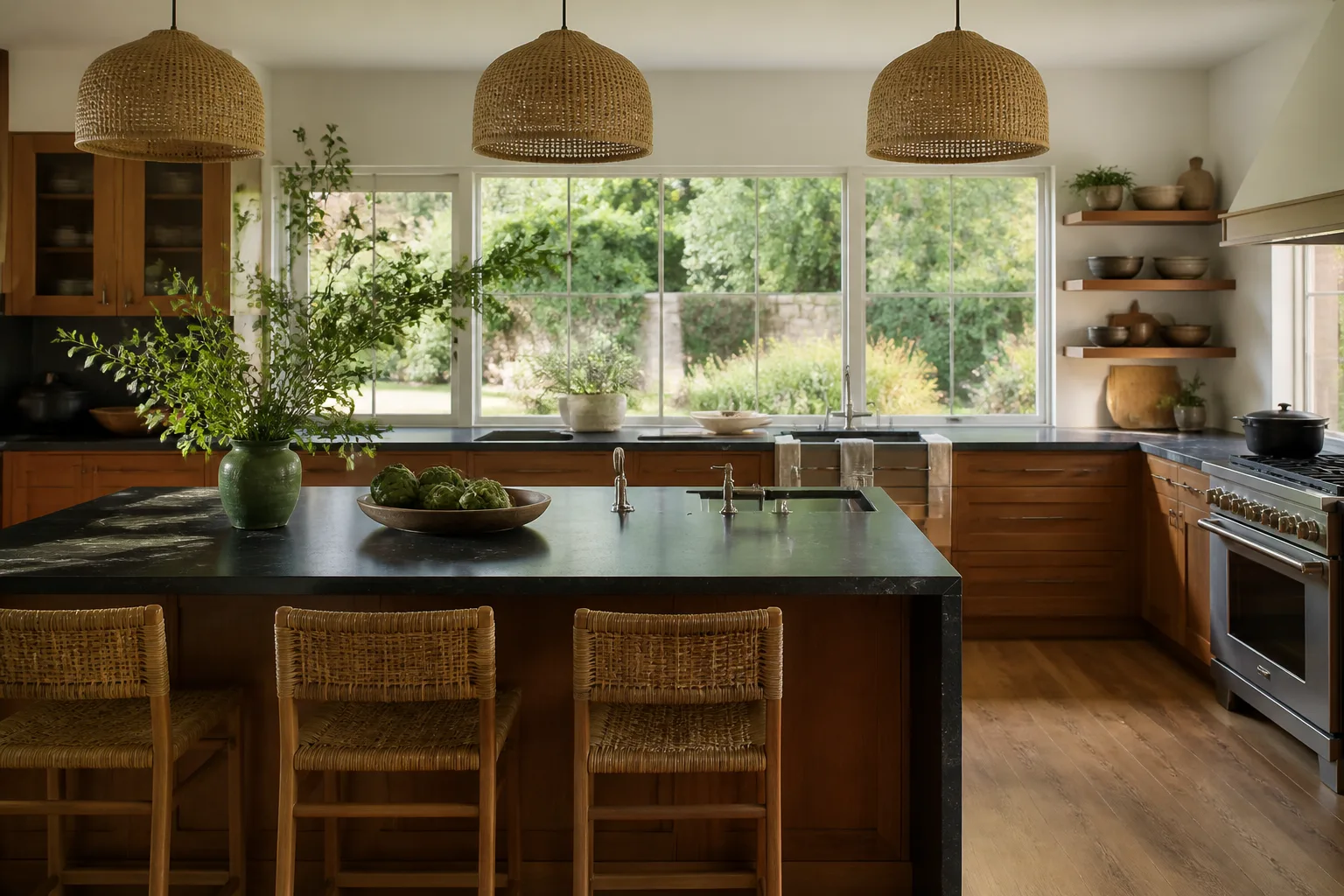
Silestone doesn’t use model numbers the way a faucet or cabinet line does. What matters for bathroom remodeling is the series, the thickness, and whether the slab was installed as a single piece or seamed. The main Silestone lines homeowners in Dallas bring up are the Eternal Series (classic colors, consistent veining), the Loft Series (industrial, matte finishes), and the Sunlit Days Series (softer, warmer tones). All three use the same fabrication specs, but colors are not cross-matched between series, so you cannot patch a Loft slab with an Eternal remnant and expect it to disappear.
Thickness is the compatibility gotcha most people miss. Silestone bathroom slabs come in 1.2 cm, 2 cm, and 3 cm. A 1.2 cm slab is always laminated to a thicker edge profile, and it needs a plywood or MDF substrate under it. A 3 cm slab can sit directly on the vanity cabinet. If your existing top is 1.2 cm laminated and you’re replacing just part of the bathroom, you either match the fabrication method or replace both tops together. Mixing thicknesses across a double vanity looks wrong and creates a lip you’ll catch every time you wipe the counter.
On OEM versus aftermarket: Silestone is a branded, proprietary product. There is no real “aftermarket Silestone.” What exists is other quartz brands that look similar, and in our experience, a homeowner who wanted Silestone is rarely happy with a substitute that’s “close.” Bradford Remodeling Co Dallas installs genuine Silestone from Cosentino’s documented distribution chain. We’re an independent remodeling contractor, not affiliated with Silestone or Cosentino, but we spec the real material so the manufacturer’s own warranty applies alongside ours.
Styles & brands we work with







Signs Your Silestone Bathroom Remodeling Is Failing
- Water staining at the backsplash seam. The caulk joint between the Silestone backsplash and the wall has failed, or was never tooled properly. Water gets behind the slab and saturates the drywall. You’ll see a dark line that grows, not a surface stain that wipes off.
- A seam you can feel with a fingernail. Silestone seams should be nearly invisible and dead flat. If the two slabs have shifted even a millimeter, the substrate below is moving. In Dallas, that’s usually a vanity cabinet that was never leveled, or a wall that has settled and pulled the top with it.
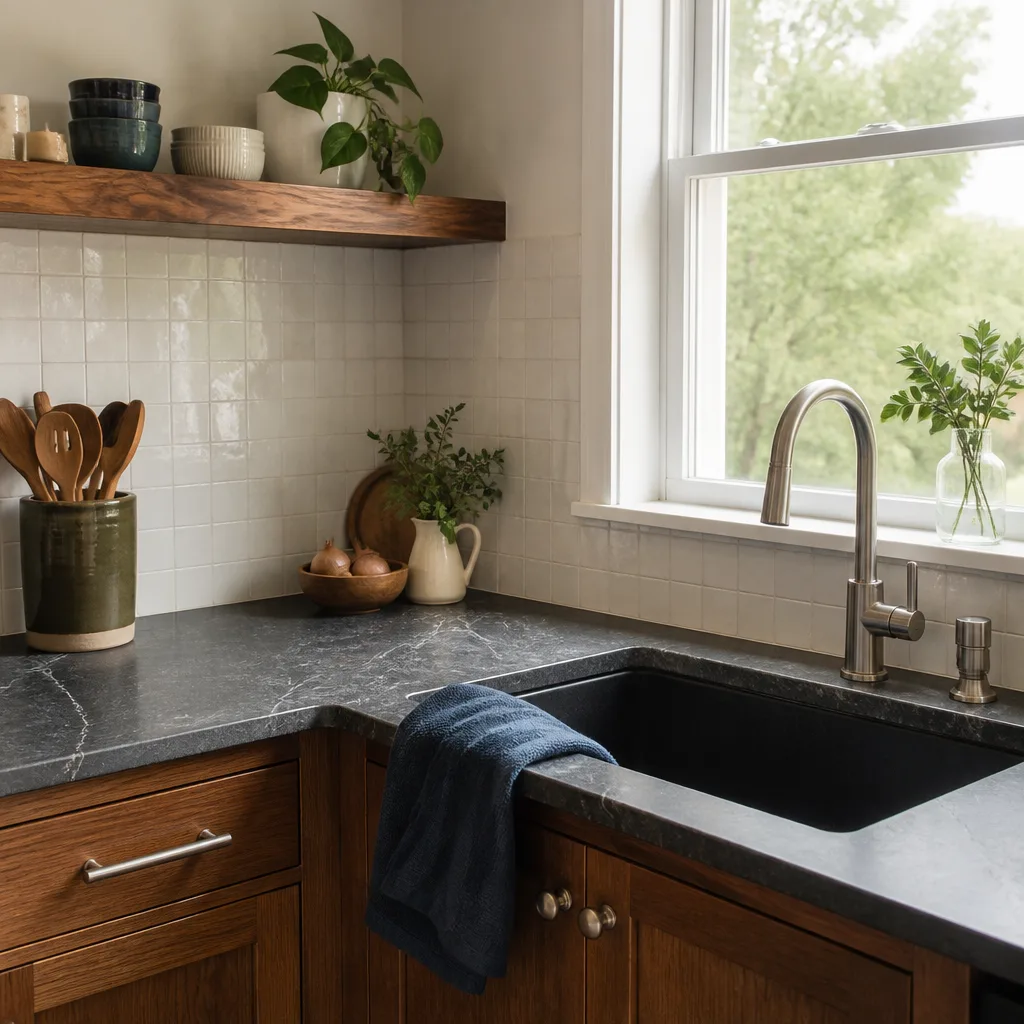
- Cracked sink bowl or chipped rim at the undermount. Undermount sinks create a stress point in the quartz. A 3 cm slab handles this fine. A 1.2 cm laminated slab with a heavy cast-iron sink can crack right at the bowl lip if the sink was over-tightened or the cabinet sags.
- Soft spots under the countertop. Press down near the lip of the Silestone, especially around the sink. If you feel give, the substrate is failing. Quartz doesn’t flex, but the MDF or plywood under it rots. Left alone, the slab will eventually crack from the uneven support.
- Raised or lifted edge at the front lip. The adhesive bond between the Silestone slab and the cabinet top has broken down, or the cabinet face frame has shifted. This is most common in Dallas bathrooms built in the 1980s and 1990s, where original cabinetry was particle board and decades of steam did their work.
See the difference
 Before
 After
After Before
 After
After Before
 After
AfterReplacement Cost & What’s Included
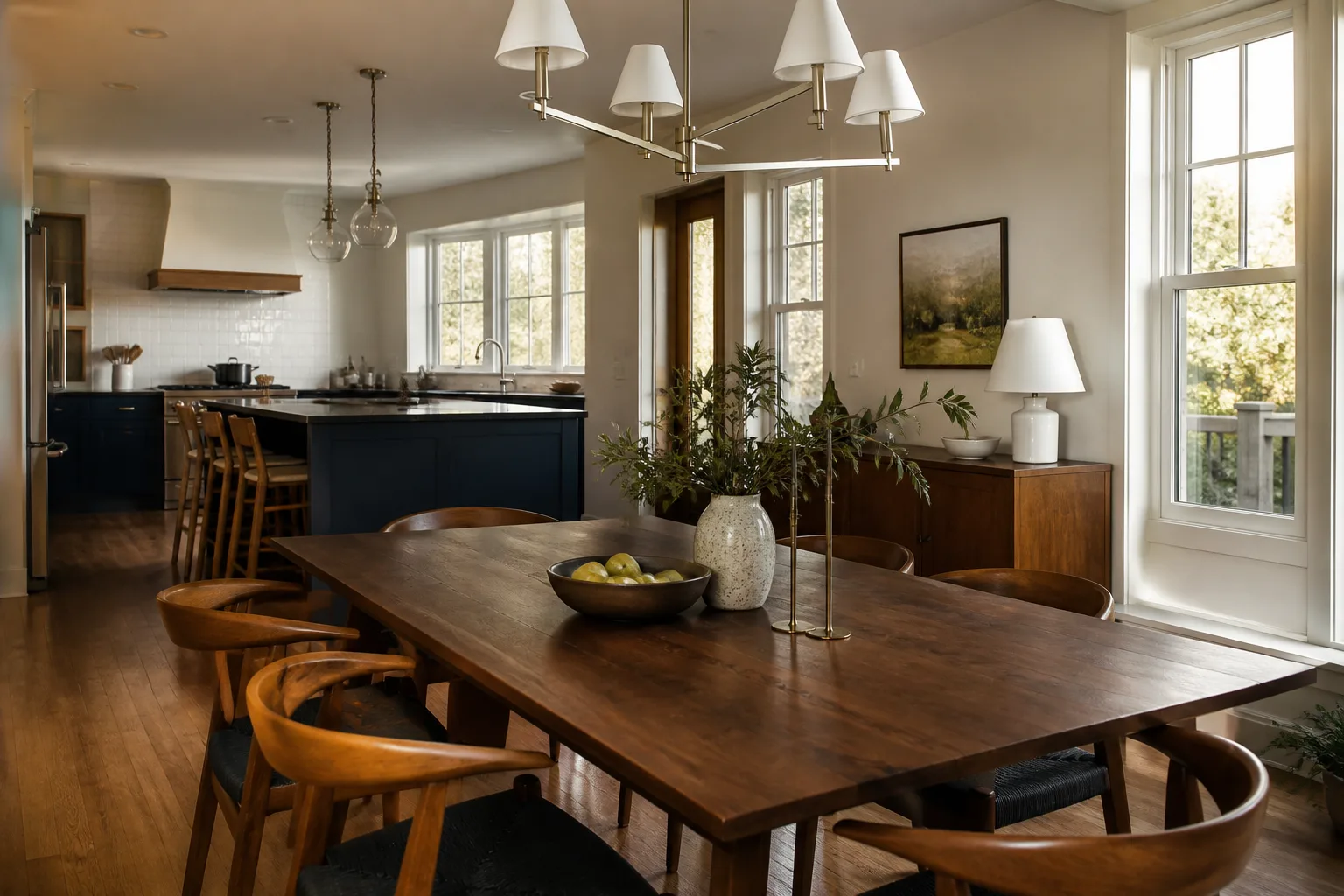
In Dallas, expect to pay $9,000 to $28,000 for a Silestone bathroom remodel depending on scope. Here’s how that range splits out:
- Vanity top replacement (single, standard 48″ to 60″): $2,000 to $6,500 including Silestone material, fabrication, sink, faucet hookup, and disposal of the old top.
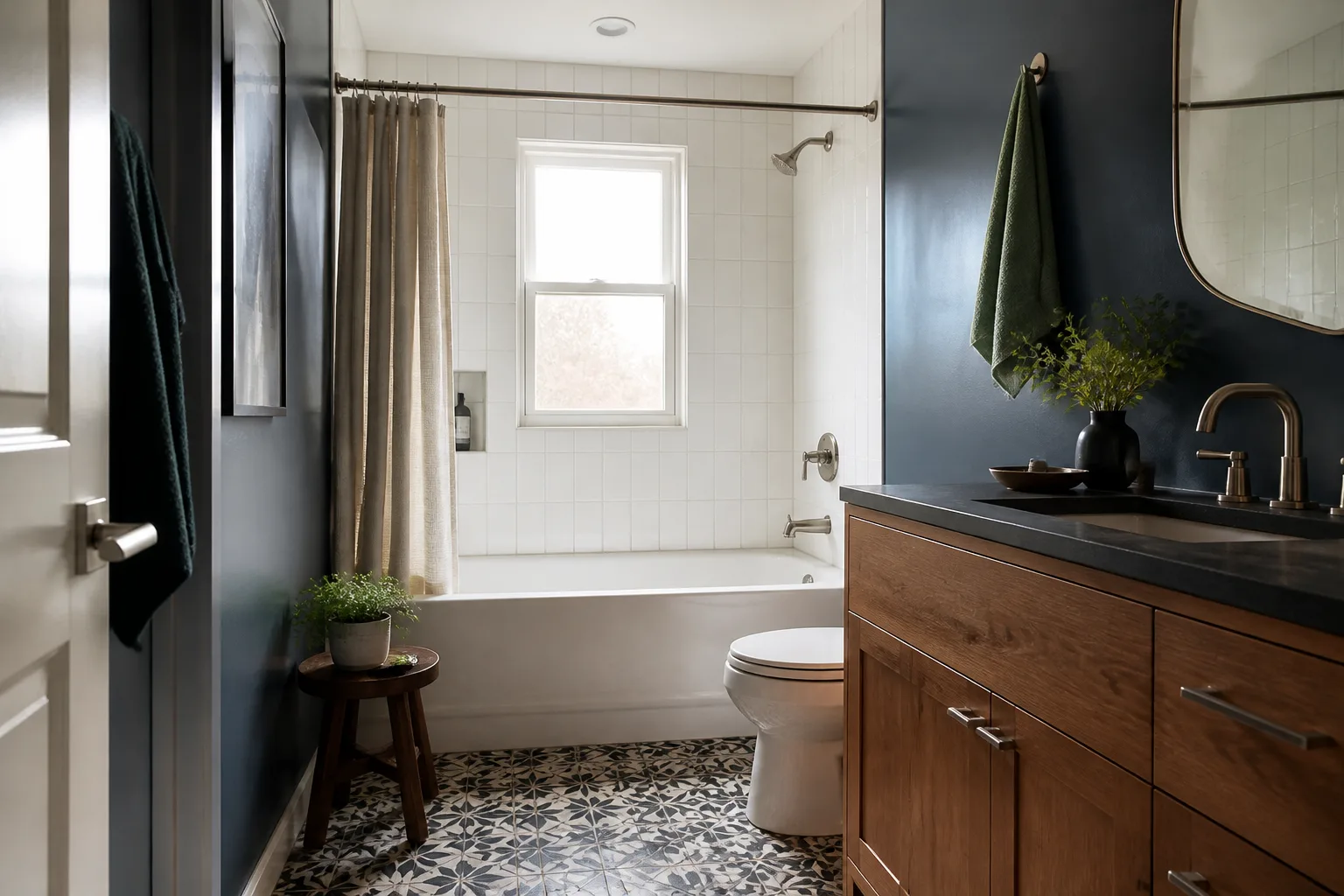
- Full bathroom remodel with Silestone vanity top, new cabinetry, tile, and fixtures: $9,000 to $28,000, with the Silestone component running roughly $2,000 to $6,500 of that total depending on linear footage and edge profile.
- Small bathroom or powder room refresh: $5,000 to $12,000, which includes a Silestone vanity top in the smaller size range plus paint, fixtures, and flooring refinish.
What drives the spread: number of slabs, edge profile (a simple eased edge costs less than a waterfall or mitered edge), sink configuration, and whether we’re salvaging the existing vanity or replacing the cabinet under it. If the substrate is rotted, that repair is a line item, not a surprise. You’ll see it on the written estimate before we start.
Every Bradford bathroom remodel carries the 365-Day Done Right Promise: if the Silestone install fails inside one year, we return and correct it at no charge. That covers seam separation, substrate failure, sink bond, and plumbing we connected. The Silestone material itself is also backed by Cosentino’s manufacturer warranty, which we confirm at delivery.
DIY or Call Us?
You can inspect your own Silestone safely: run a fingernail across every seam, press down around the sink, check the caulk line at the backsplash with a flashlight. If you find a gap or a soft spot, document it with photos and stop using the sink until it’s assessed. Water is patient.
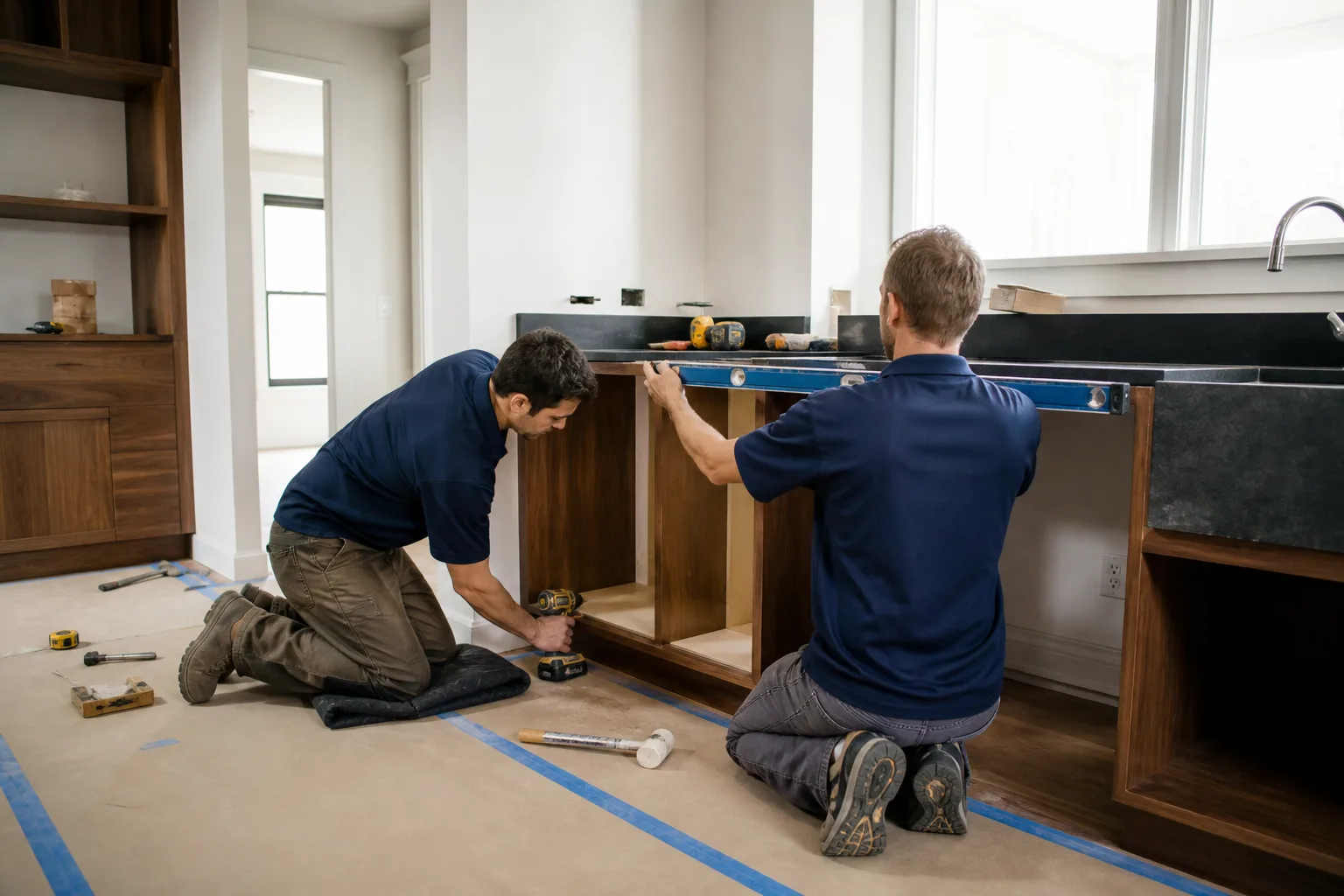
What we don’t recommend is pulling a Silestone slab yourself. A standard 48-inch bathroom top in 3 cm quartz weighs somewhere around 200 to 250 pounds. The risk isn’t just the weight. It’s the undermount sink attached to the bottom, the plumbing you’ll need to disconnect, and the fact that quartz chips hard at the edge the moment it tips against a wall or floor tile. We do this with two people, suction cups, and a plan for the route out of the house. Call (903) 326-8963 and we’ll set up a time to look at what you’ve got.
FAQs
A properly installed Silestone bathroom top should last 20 to 30 years without warping, staining, or losing its polish. What usually fails first in Dallas is the substrate under the slab or the caulk joints around it, both of which are repairable without replacing the stone.
Small chips can be filled with color-matched epoxy, and a seam can be re-tooled if it separates. A structural crack that runs through the slab, or a failed substrate underneath, means replacement. Call (903) 326-8963 and describe the crack; we’ll tell you honestly which one you have.
A straight vanity top replacement is typically a one-day job in Dallas: remove the old top, prep the substrate, set the new Silestone slab, reconnect plumbing, and clean the site. A full bathroom remodel with Silestone runs one to three weeks depending on tile, cabinet, and fixture scope.
We order Silestone directly through Cosentino’s distribution channel with the color and thickness you choose, fabricated to template. Lead time on the material is usually one to two weeks in the Dallas market. We also work with KraftMaid cabinetry, Cambria surfaces, and Kohler fixtures if your remodel spans beyond the countertop, so every spec stays documented.
Written by Curtis Lane, Owner, Bradford Remodeling Co Dallas at Bradford Remodeling Co Dallas, serving Dallas and nearby areas.


