
Free written scope consultation - allowances, timeline, and change-order rules on paper before a single trade is scheduled
CGI Home Additions & ADU: The Dallas Owner’s Guide
If you’re reading this, you likely have a CGI home addition or ADU that’s showing problems: a failing roof connection, water intrusion at the roofline, or sheathing that’s started to sag over time. A full CGI home addition or ADU project in Dallas typically runs $45,000 – $130,000 depending on square footage, site prep, and material choices. Bradford Remodeling Co Dallas handles the structural repair, re-framing, and finish work on these jobs, and we’ll give you a written price before any work starts.
Most owners discover the issue the same way: after a heavy North Texas thunderstorm, a stain shows up on the ceiling where the addition meets the original house. CGI products are widely known for windows and vinyl siding, but when those materials get integrated into a home addition or an ADU without proper flashing and substrate work, the connection points fail first. The siding itself may be fine. The joinery underneath is what gives out.
Which CGI Models This Applies To

CGI home additions and ADUs aren’t a single product line the way a window series is. CGI manufactures exterior building products: impact-rated windows, vinyl siding profiles, and trim systems that get built into additions and accessory dwelling units. On the siding side, the common Dallas installs involve CGI’s Board & Batten, Lap, and Cedar Impressions profiles. The windows showing up most often on Dallas ADUs are the Estate Collection and Sentinel Series, both rated for the impact and wind loads we see in North Texas storm season.
Here’s the compatibility gotcha most people miss: the CGI product itself may carry a long manufacturer warranty, but that warranty covers the material, not the installation that ties it into your roof line, foundation, and framing. If you’re sourcing replacement parts, an OEM CGI window or panel is the right call for matching existing profiles. For the structural components underneath, a quality aftermarket equivalent (properly spec’d OSB, flashing, and treated lumber) often performs identically or better in Dallas’s clay-heavy soils. We’ll match the right material to the job and tell you which is which before you spend a dollar.
To identify what you have, look for the CGI label on the interior window frame or the stamped marking on the back of a siding panel. Take a photo of the profile edge. That tells us everything we need to match it.
Styles & brands we work with







Signs Your CGI Home Addition & ADU Is Failing
- Water staining at the ceiling seam where the addition ties into the original roofline. This is the number one call we get in Dallas. The connection point between new framing and old framing settles differently, and the flashing separates. The CGI siding didn’t fail. The transitional flashing did.
- Drywall cracks radiating from window corners in the addition. Dallas’s expansive clay soil moves houses. If the addition’s foundation wasn’t engineered for the same movement as the main structure, stress concentrates at window and door openings first.
- Siding that’s wavy or buckling along the south-facing wall. CGI vinyl siding expands and contracts with temperature swings. Installed without proper nail slot allowance, panels buckle in Dallas’s summer heat. The fix is removing and re-nailing, not replacing the siding.
- Doors that stick in summer but close fine in winter. That differential movement points to framing that’s absorbing moisture or shifting with soil. It’s not the door. It’s the rough opening behind it.
- Musty smell in the ADU after rain, with no visible leak. Moisture is getting behind the CGI siding at the bottom edge where the starter strip meets the foundation. Water wicks up into the wall cavity and sits there. By the time you smell it, the bottom plate is already compromised.
See the difference
 Before
 After
After Before
 After
After Before
 After
AfterReplacement Cost & What’s Included
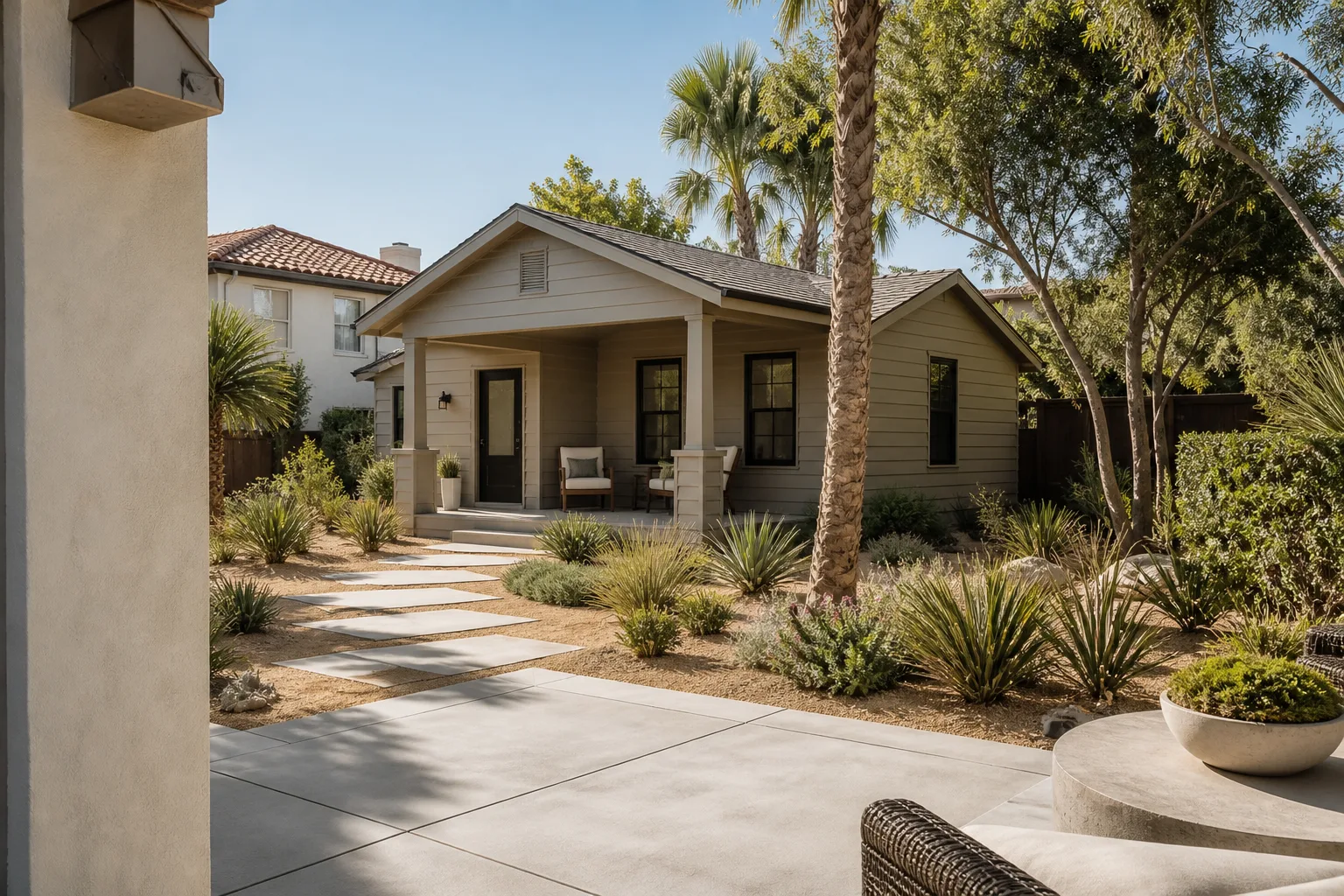
In Dallas, a full home addition runs $45,000 – $130,000. An ADU construction project runs $90,000 – $220,000, and a garage conversion lands between $30,000 – $80,000. For partial remediation on an existing CGI addition, smaller scopes like re-flashing a roof tie-in or re-nailing siding panels typically fall in the $3,000 – $12,000 range depending on access and the extent of the water damage already done.
| Scope | Dallas Price Range |
|---|---|
| Home Addition (full build) | $45,000 – $130,000 |
| ADU Construction | $90,000 – $220,000 |
| Garage Conversion | $30,000 – $80,000 |
| Re-flashing roof tie-in on existing addition | $3,000 – $12,000 |
| Siding re-nail and correction | $1,500 – $5,000 |
Every quote includes the parts, labor, and disposal, in writing, before we start. No numbers move at the door. Curtis Lane keeps scopes tight and change orders rare precisely because surprises on a five-figure job are unacceptable. When the job closes, you get a signed written guarantee in your hand, the site is clean, and the scope is documented.
DIY or Call Us?
You can safely inspect a few things: walk the perimeter and look for gaps where siding meets trim, check for visible rust on exposed flashing, and note whether any panels have pulled away from the wall. None of that requires a ladder.
What you should not do yourself: get on a roof to inspect a tie-in seam, remove siding to check for water damage, or attempt any structural repair. You’re working at height with materials under tension, and a misstep costs more than any inspection savings. We’ve pulled enough rotted bottom plates out of Dallas ADUs to know that what looks like a small stain from the outside is usually a bigger problem behind the wall. Call (903) 326-8963 and we’ll come look at it properly.
FAQs
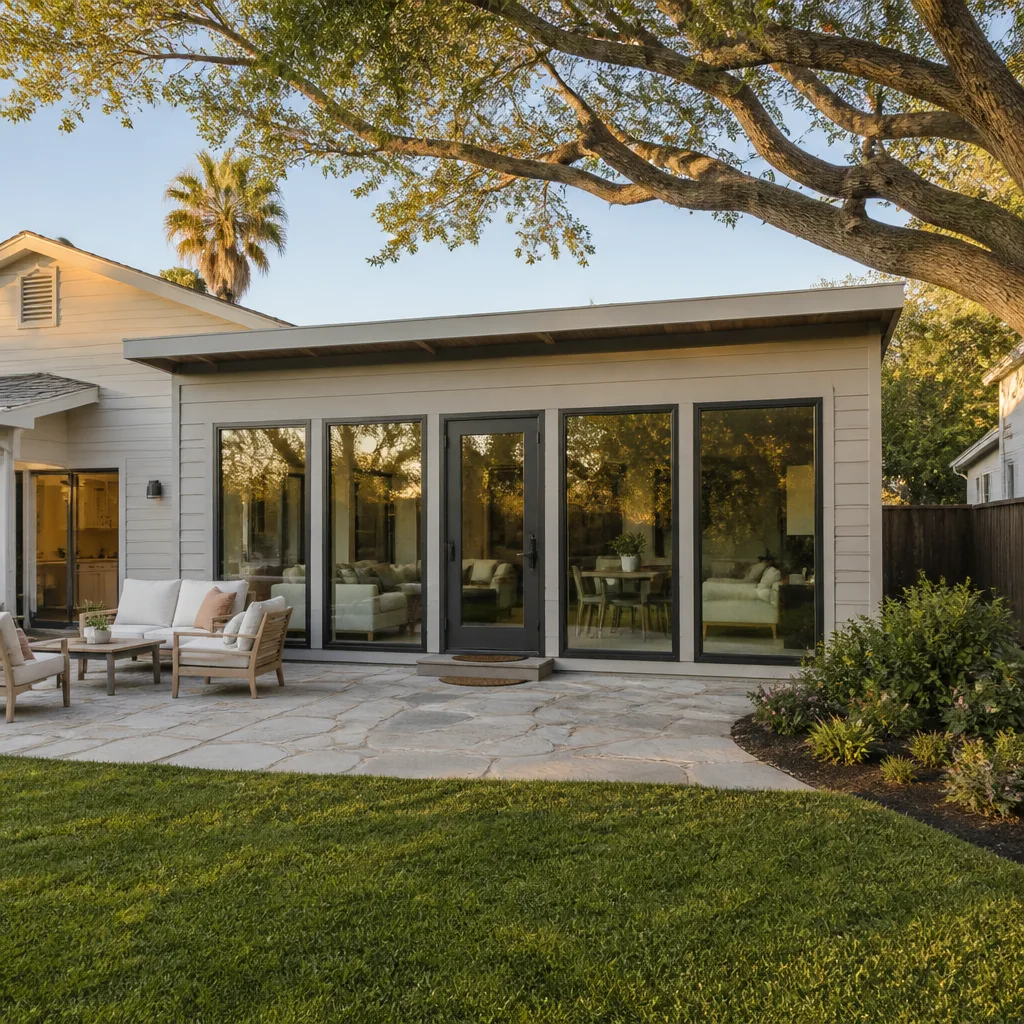
The CGI siding and window products themselves can last 30 to 50 years with proper installation. The structural connections, flashing, and sealants underneath typically last 10 to 20 years in Dallas’s climate before needing correction. The weak point is never the CGI panel. It’s the transition work. Call (903) 326-8963 and we’ll assess what actually needs attention.
Most issues can be repaired without rebuilding the addition, if caught early. Re-flashing a roof tie-in, re-nailing siding, or repairing a compromised bottom plate are targeted fixes. Full replacement only makes sense when water damage has spread through a large portion of the framing. A written estimate will tell you which path you’re on before you commit.
A siding re-nail or simple re-flashing job typically takes one to two days. Full ADU or addition builds run four to eight months depending on size and permitting. For any scope, we put the timeline in writing along with the price.
We order direct through our documented supplier roster and can source OEM CGI panels, windows, and trim profiles for your project. We also carry the structural materials on our trucks: correct-gauge flashing, treated lumber, and spec’d OSB for the substrate work. The structural side is what usually needs fixing, and we have it on hand.
Written by Curtis Lane, Owner, Bradford Remodeling Co Dallas at Bradford Remodeling Co Dallas, serving Dallas and nearby areas.


