
Free written scope consultation - allowances, timeline, and change-order rules on paper before a single trade is scheduled
James Hardie Home Additions & ADU: The Dallas Owner’s Guide
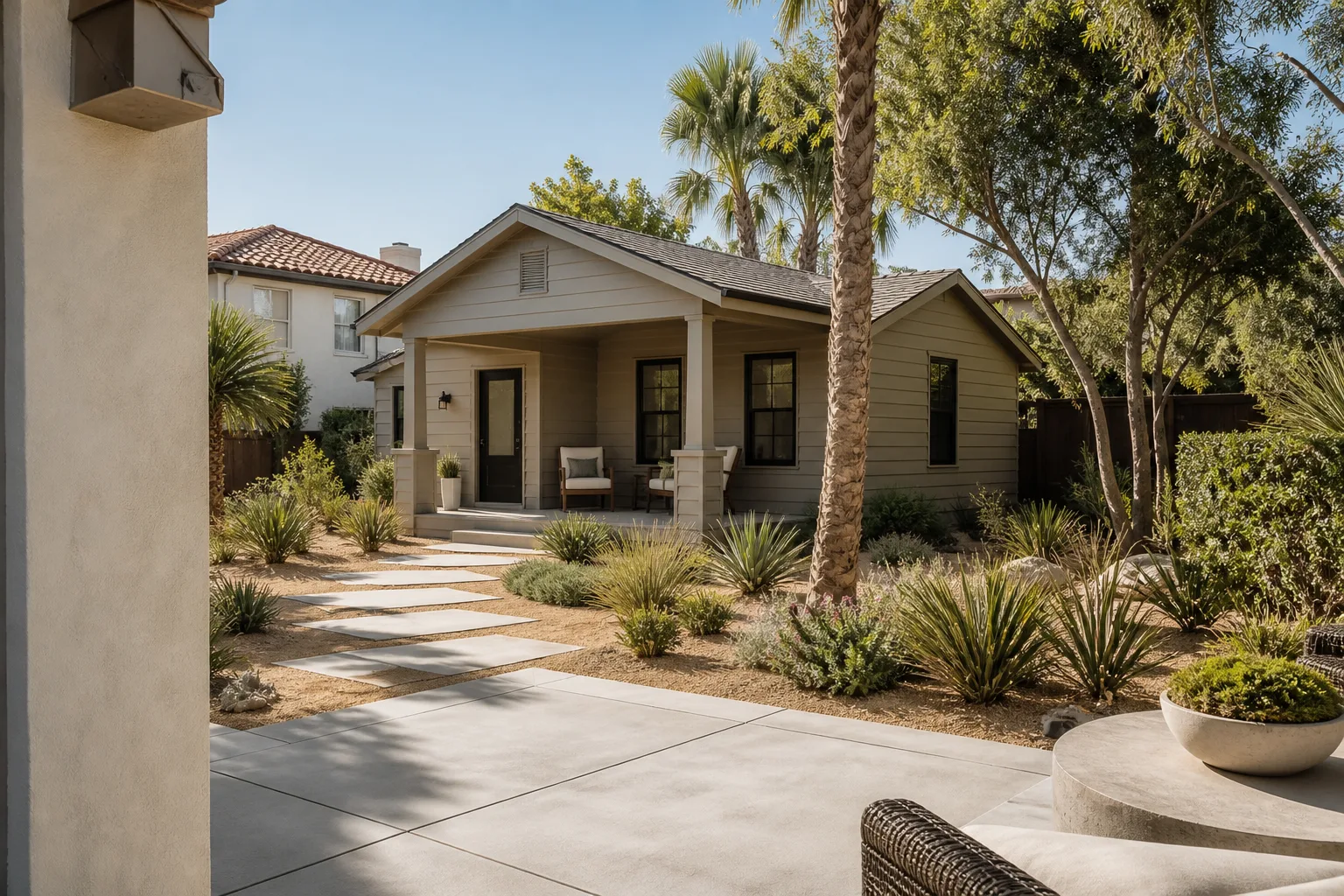
We regularly design and build home additions and ADUs in Dallas using James Hardie siding, trim, and soffit products, with most projects landing between $45,000 and $130,000 depending on size, foundation work, and the scope of interior finish. If you’re researching this page, you’re likely holding a failing exterior on an existing addition or planning an ADU and want real numbers before you commit.
The failure picture for an existing James Hardie-clad addition in Dallas usually starts small: a soffit panel pulling loose after a spring storm, caulk joints opening at the trim line, or paint blistering along the west-facing wall where the July sun does its worst. What starts as a visual annoyance becomes a water-intrusion problem inside a season or two. Our crews see this pattern across Lake Highlands, East Dallas, and the Park Cities every summer. The fix is rarely a patch: it’s restoring the envelope correctly, and often rebuilding the transition details that failed first.
Key takeaways:
- James Hardie additions and ADUs in Dallas cost $45,000 – $130,000 built to spec, with the spread driven by square footage, sitework, and interior scope.
- Most failures occur at joints, transitions, and poorly flashed window openings, not in the Hardie material itself.
- Every Bradford project gets a written price before work starts and a 365-Day Done Right Promise in writing at completion.
- We stock James Hardie trim, plank, and panel profiles, plus the flashing and sealants the manufacturer specifies.
Which James Hardie Models This Applies To
Our additions and ADU work in Dallas centers on three James Hardie product lines: HardiePlank lap siding (both the 5.25-inch and 8.25-inch exposures), HardiePanel vertical siding, and HardieTrim boards in the 4/4 and 5/4 thicknesses. Each line has its own fastening schedule and joint treatment, and the details are not interchangeable. A HardiePlank joint needs a specific gap and flashing treatment depending on whether you’re using the ColorPlus factory finish or field painting. HardiePanel runs on an entirely different layout. Get the spec wrong and you void the manufacturer’s warranty before the first season of Texas weather hits it.
If you’re matching an existing addition, look for the product code printed on the back of a removed piece, or measure the exposure precisely: 5.25 inches is the standard residential lap, while 8.25 inches is the wider profile that reads more contemporary. The OEM versus aftermarket question for James Hardie is less about generic substitutes and more about the accessories: flashing, joint treatment, corner boards, and sealant. We use manufacturer-specified flashing and a compatible sealant on every joint because that is where Dallas additions fail. Generic caulk from a big-box shelf breaks down in the hot-dry to hot-wet cycles we get here. It is a false economy.
One compatibility detail worth knowing: James Hardie ColorPlus products carry a 15-year finish warranty only when installed with the specified trim and flashing system. Field-painted Hardie has a different set of requirements. A contractor who does not know the distinction will not build you a wall that holds up. The Garrison Standard requires our crew to follow the manufacturer’s install manual on every opening, every joint, and every termination, full stop.
Styles & brands we work with







Signs Your James Hardie Home Additions & ADU Is Failing
- Caulk pulling away at trim lines and window heads. The sealant has lost adhesion, usually because the original installer used a generic product or skipped backer rod. Water follows the gap and starts working on the substrate behind the siding. Left alone, this escalates from cosmetic to structural in two to three Dallas winters.
- Bubbled or peeling paint on west- and south-facing walls. This is moisture trapped behind the finish, not just sun damage. Hardie is dimensionally stable, but the wall behind it may not be. The peel means the wall assembly is not drying the way it should.
- Soft spots or swelling at the bottom edge of siding. If the bottom course sits too close to grade or lacks the required 6-inch clearance from finished ground, it wicks water. In North Texas clay soil, grading shifts over time and can close that gap. The siding is fine; the clearances are not.
- Gaps opening at inside corners and where walls meet the roofline. Hardie moves with temperature and humidity. If the installer did not leave the correct expansion clearance and install flashing behind the joint, the joint opens. Water gets behind the wall every time it rains.
- Rust staining below fasteners or visible nail heads. James Hardie requires corrosion-resistant fasteners, not standard framing nails. If the head has rusted and bled through the paint, the fastener is failing and the panel is carrying wind load on fewer contact points. The next straight-line storm is the one that peels it loose.
See the difference
 Before
 After
After Before
 After
After Before
 After
AfterReplacement Cost & What’s Included

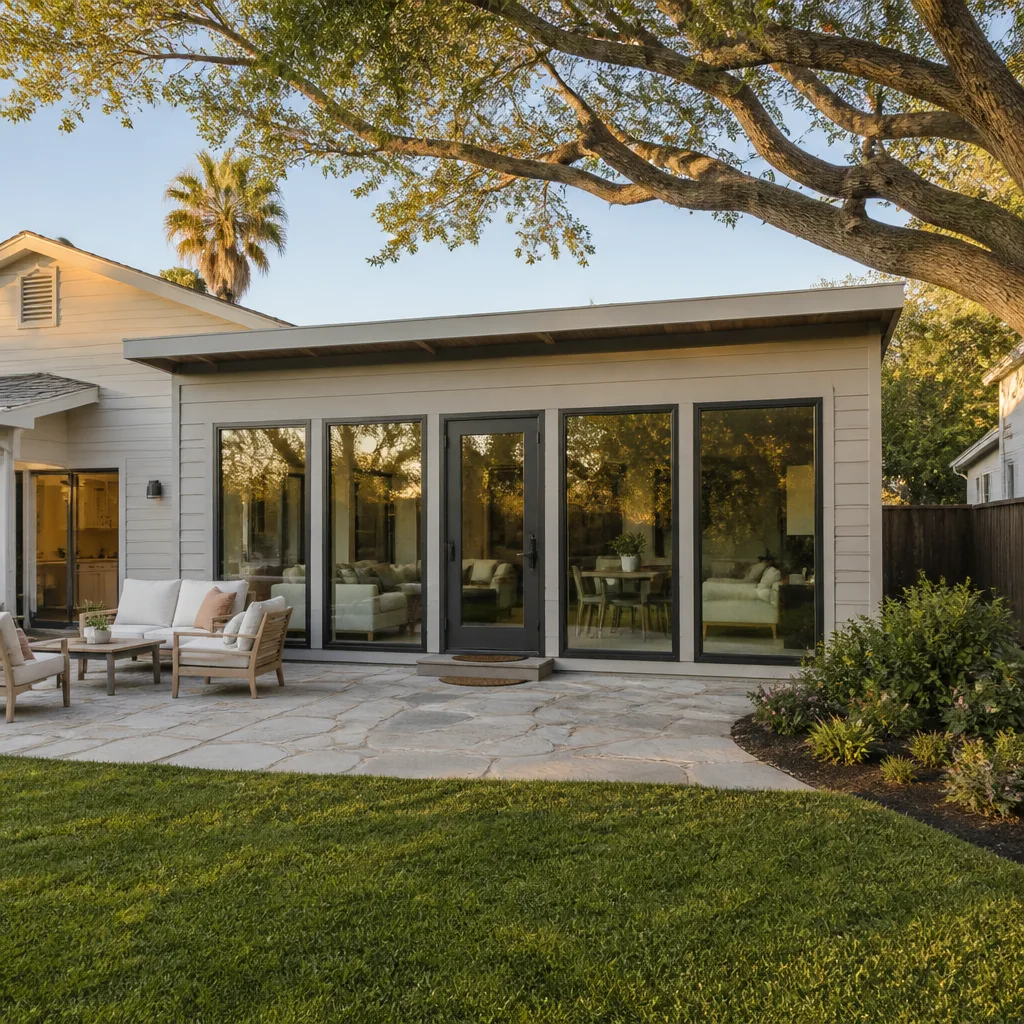
For a full James Hardie addition or ADU build in Dallas, the installed range is $45,000 to $130,000. Smaller additions in the 400-square-foot range with basic finish work start near the bottom of that band. A larger ADU with a full kitchen, bath, and separate HVAC lands near the top. The spread is real and driven by three things: the size of the footprint, the condition of the existing foundation (soils in East Dallas move; we verify before we quote), and how much interior work you want inside the new square footage.
For repairs or partial reclads on an existing Hardie-clad addition, our written bids are line-itemed: materials, labor, flashing, sealants, and disposal. You know the price before we start, and it does not change at the door. Every completed project, whether it is a full ADU or a reclad, carries the 365-Day Done Right Promise, a written guarantee that says if the work fails within one year, we return and correct it at no charge. You get the signed guarantee at close, along with a clean site and a documented scope. No change orders buried in the final invoice.
DIY or Call Us?
You can safely do the visual inspection: walk the addition after the next heavy rain and look for the signs above. Check the caulk lines at windows and trim. Look at the bottom course clearance from grade. But once you find a failure, the repair is not a weekend project. James Hardie installation in Dallas requires cutting the fiber cement without leaving silica dust all over your house, matching profiles in a market where supply runs inconsistent, and re-establishing the flashing details that failed. And the material is heavy, brittle, and unforgiving on a ladder. One dropped board is a broken board, and Hardie is not cheap to replace.
If the damage is at a window transition or wall-roof intersection, call us. That is where the original install went wrong, and it is where a botched repair causes the most expensive damage: water inside the wall cavity. We can put a scope on it quickly and give you a written number. Call (903) 326-8963 and tell us what you are seeing. We will tell you whether it is a repair or a replacement, and what each one costs before you spend a dime.
FAQs
James Hardie fiber cement carries a 30-year non-prorated product warranty, and the siding itself will routinely outlast that in our climate if it was installed with proper clearances and flashing. In Dallas, the weak points are joints and transitions, not the material. A properly installed Hardie wall will last 40 years or more before the panels themselves need attention.
In many cases, yes. Isolated damage at a joint or a single damaged panel can be repaired without recladding the entire wall. The repair requires removing the damaged course, inspecting the flashing behind it, and reinstalling with the correct overlap and sealant. We do these repairs regularly. If the damage is widespread or the flashing detail is wrong, a partial reclad is the honest fix. Call (903) 326-8963 and we will tell you which one you are looking at.
A full ADU or addition build in Dallas typically runs three to six months from permit to final inspection, depending on foundation work, interior scope, and the city’s inspection queue. Repairs and partial reclads on existing Hardie-clad additions take one to three days. We put the schedule in writing with the price, and we hold to it.
We stock common HardiePlank profiles (5.25-inch smooth and cedar-texture), HardiePanel, and HardieTrim in 4/4 thickness, plus the specified flashing and sealants, on our Dallas trucks. Less common profiles and ColorPlus finishes are ordered direct from our supplier, typically a two-to-three-day turnaround in the Dallas market. We will tell you at the estimate if your product needs to be ordered, and the lead time is in the written price.
If you are planning a James Hardie-clad addition or ADU in Dallas, or you have an existing one that is showing its age, call (903) 326-8963. Curtis Lane and the crews at Bradford Remodeling will walk the site with you, tell you what you are looking at, and put a straight number in writing before anything gets torn apart. No surprises, no runaround. Straight number, real scope, no surprises on delivery day.
Written by Curtis Lane, Owner, Bradford Remodeling Co Dallas at Bradford Remodeling Co Dallas, serving Dallas and nearby areas.


